The codes come from the visit
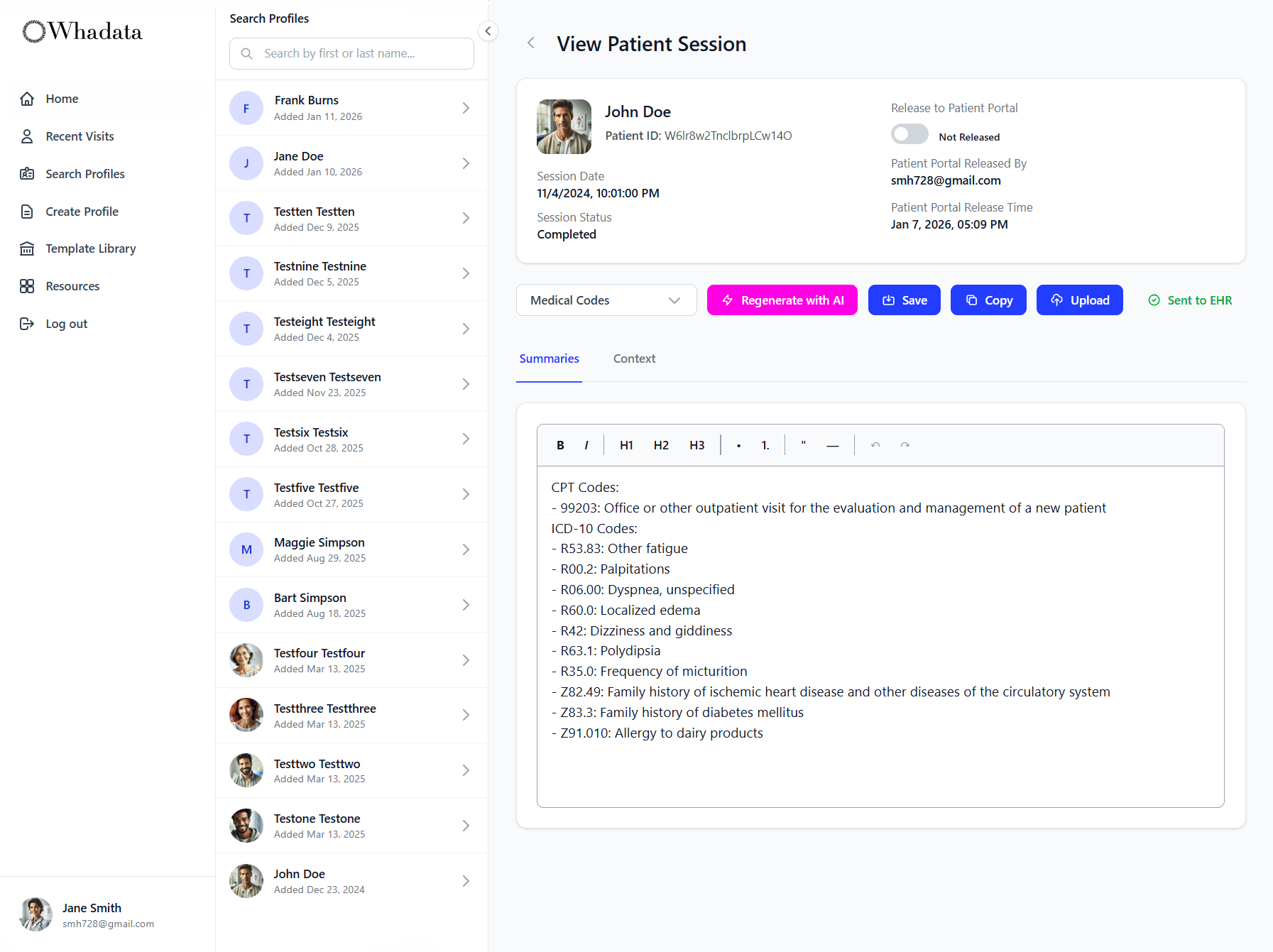
A coding engine reads the Scribe note and pulls the diagnoses and procedures for the claim: ICD-10 with HCC categories, CPT and HCPCS with units and charges. Everything lands on an editable worksheet where you can search codes, adjust, and confirm before anything goes out.
- Diagnoses and procedures extracted from the note
- ICD-10-CM with HCC category lookup
- CPT and HCPCS with modifiers, units, and charges
- Search and edit codes on a worksheet
A scrub that tells you why
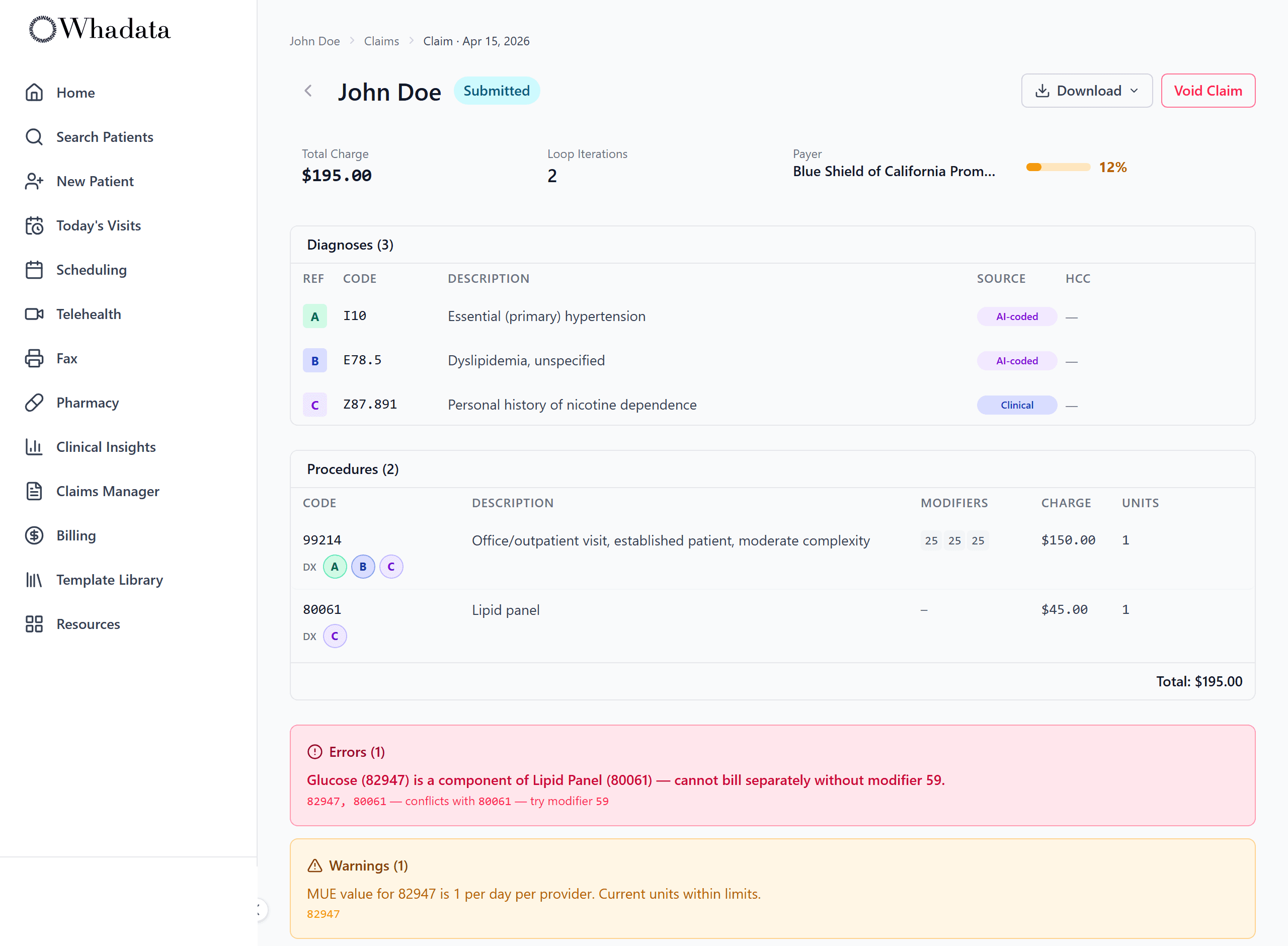
Before the claim leaves, it runs through NCCI edits. The scrubber catches procedure-to-procedure conflicts and medically-unlikely unit counts, and explains each one in plain language with the codes involved and the fix, not a generic reject.
- NCCI procedure-to-procedure (PTP) edits
- Medically Unlikely Edits (MUE) on units
- Bundling and component conflicts flagged with the reason
- Suggested modifier when one applies
See the denial before the payer does
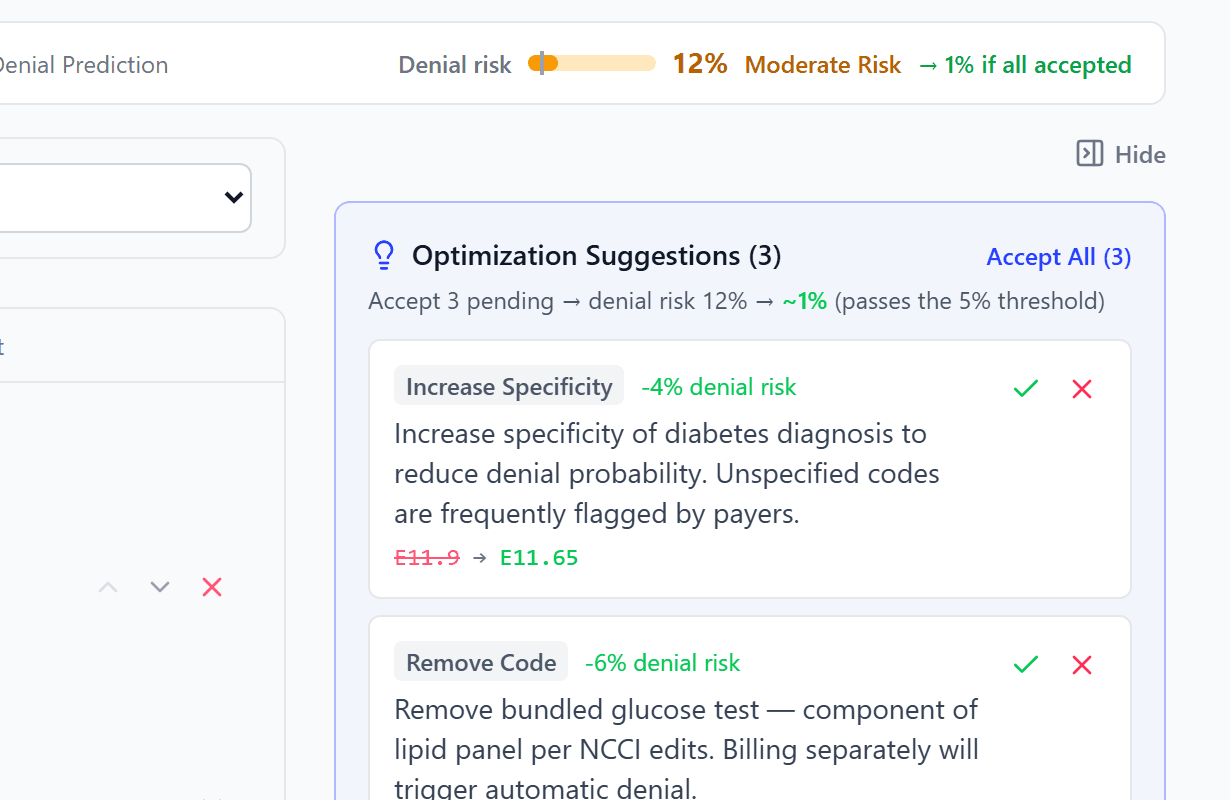
Each claim gets a denial-probability score and a ranked list of fixes: tighten an unspecified diagnosis, drop a bundled code, add a modifier. Every suggestion shows how much it lowers the risk, so you can clean the claim up and generate the CMS-1500 or superbill with confidence.
- Denial probability scored per claim
- AI fixes: increase specificity, remove bundled codes, add modifiers
- Each suggestion shows its estimated impact
- Generate the CMS-1500 claim form and superbill
Get paid for the work you did
Codes from the visit, an NCCI scrub, and a denial score, on a working route from chart to claim.